How one of the world's greatest interior architects rediscovers emotion through timeless design
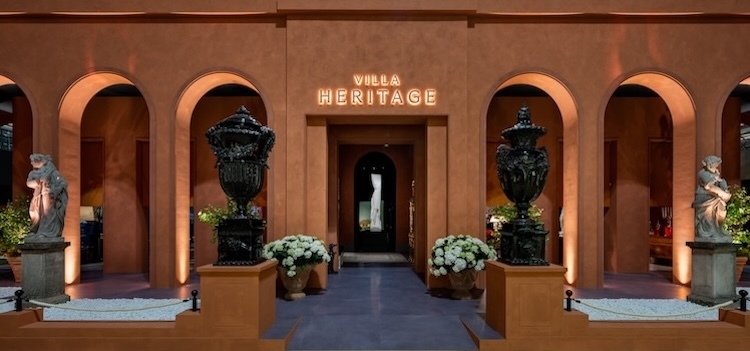
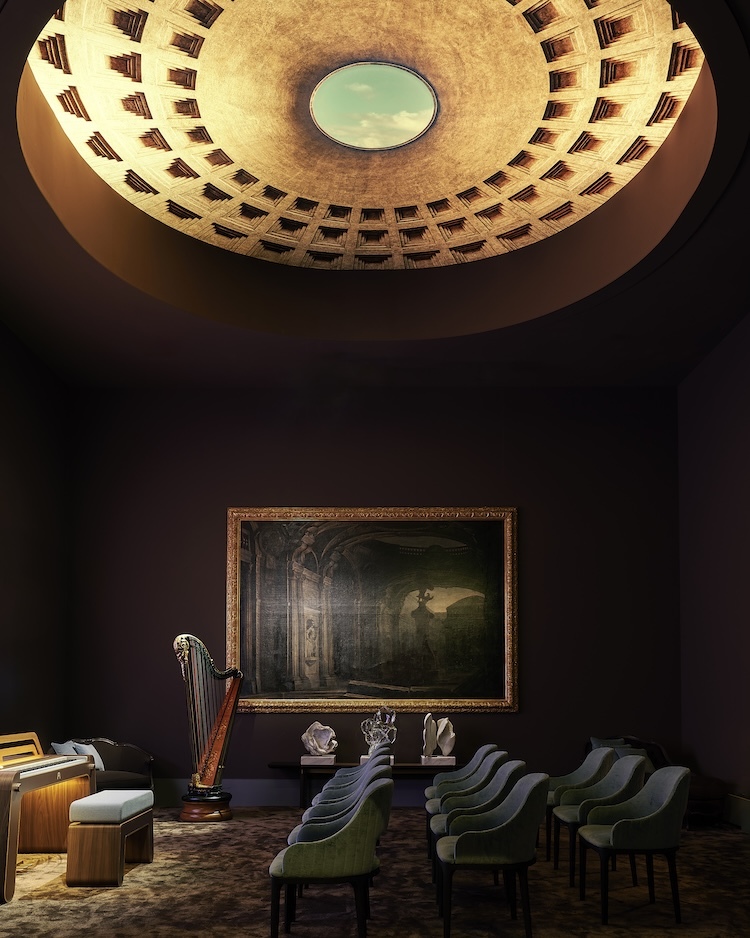
At Salone del Mobile.Milano 2025, Alpange took center stage in Villa Héritage, the landmark installation conceived by Pierre-Yves Rochon. At the heart of the villa, the Music Room embodied the architect's conviction that music is not an addition to a space, but one of its essential foundations.
Some collaborations go beyond the scope of a project. They reveal a shared vision of space, emotion and the art of living.
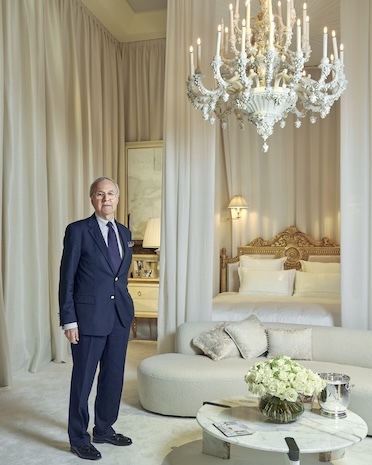
When Salone del Mobile.Milano commissioned Pierre-Yves Rochon to create its flagship installation for the 2025 edition, the renowned French interior architect did not design a showroom. He imagined a home.
"The great challenge for me was to tell a story different from what is expected," Rochon explains. Villa Héritage is that story.
Among every piece selected to inhabit Villa Héritage, one object occupied a singular place: an Alpange piano, chosen by Pierre-Yves Rochon himself to become the centerpiece of the Music Room.
This was never a decorative gesture or a product placement. It was an architectural decision.
Villa Héritage was conceived as a dialogue between heritage and contemporary creation, where every room tells a different story and every object contributes to the emotional narrative of the house. More than an installation, it invited visitors to reflect on how spaces shape our memories and define the way we live.
The music room, the architecture's truest purpose
In every home, the true heart is the one that brings people together.
Pierre-Yves Rochon deliberately placed the Music Room at the center of Villa Héritage. The decision reflects a philosophy that has guided his work throughout some of the world's most prestigious hotels and private residences: music is fundamental to the identity of a place.
It creates a rhythm.
It slows time.
It brings people together.
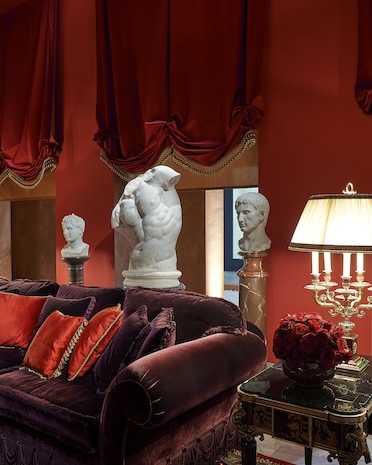
Within Villa Héritage, architecture, sound and materiality converge in a contemplative space. Beneath Massimo Listri's monumental photograph of the Pantheon dome, artworks, furnishings and the Alpange piano engage in a quiet dialogue. Music is no longer an accompaniment to architecture. It becomes one of its essential elements.
Why Alpange
The selection of the Alpange piano was deliberate, reflecting a precise understanding of what distinguishes truly exceptional spaces.
The instrument does not compete with the historical narrative surrounding it. Instead, it completes the dialogue: past and future existing simultaneously, neither diminishing the other.
"Here, where architecture and sound meet, the Alpange becomes a symbol of art in constant evolution, a bridge between the piano tradition and the infinite possibilities of technology," states the press release. It is a precise articulation of why Rochon chose it.
With its contemporary design and unlimited memory system, the Alpange embodies the philosophy running through Villa Héritage: heritage is not a constraint, but a source of freedom. Creativity transcends the moment it is created in, carrying beauty across eras. Aesthetics go beyond events, trends, and time.
For architects designing spaces of true distinction
The finest private residences and luxury hotels are no longer defined by architecture or decoration alone. They are remembered for how they make people feel.
Light, materials, works of art, fragrance, silence, music, these elements converge to create a complete sensory experience. For architects designing spaces of genuine distinction, the question is no longer “What goes in this room?” It is “What emotional truth should this room embody?”
This is where Alpange naturally belongs.
An Alpange piano becomes a gathering place where people pause, listen, and share moments of genuine connection. It introduces a discreet yet profoundly human presence into architecture. Whether in a private residence, a boutique hotel, a restaurant designed for contemplation, or a cultural space meant to inspire, the Alpange transforms a room into a room with memory, a room with a heartbeat.
Villa Héritage demonstrates this principle with crystalline clarity. The piano was not placed in the Music Room because it was beautiful or because it represented musical innovation. It was placed there because Rochon understood that in spaces designed with such intention, music itself becomes an architectural element, and the instrument that produces it must be worthy of that responsibility.
The lesson for tomorrow
When Villa Héritage is dismantled, the rooms will exist only in memory and photographs. But the question it poses will linger: What if luxury was not about having everything, but about creating the conditions for emotion to emerge? What if the piano at the center of a room was not a status symbol, but proof of commitment to the human experience?
For architects and designers working today, Villa Héritage offers a compass. It says: heritage is not a constraint. It is freedom. And that freedom, properly understood, is the only true luxury that endures.
This is the vision Alpange shares with architects and designers shaping the exceptional projects of tomorrow, spaces where every element serves a purpose beyond the functional, where design carries emotion, and where music naturally finds its place at the heart of the home.